
Sadie’s Story
“You guys are fantastic. Thank you so much. You have helped so much implementing so many Speech and Language practices that support our children.” – David, Class Teacher
When five-year-old Sadie first entered the classroom, it was as though the world moved too fast for her to find her place in it. Surrounded by the noise and energy of a busy reception class, she sat quietly. Rarely speaking. Often confused. Missing out on the joyful chaos of group learning and the simple fun of playground games.
Sadie’s teachers noticed she struggled to follow instructions, to express her thoughts, and to engage with those around her. She wasn’t verbalising during group work, and she often misunderstood classroom tasks. In the playground, she stayed on the edge — sometimes joining in, but rarely using words.
It was clear Sadie needed support. Not just to speak — but to feel understood.
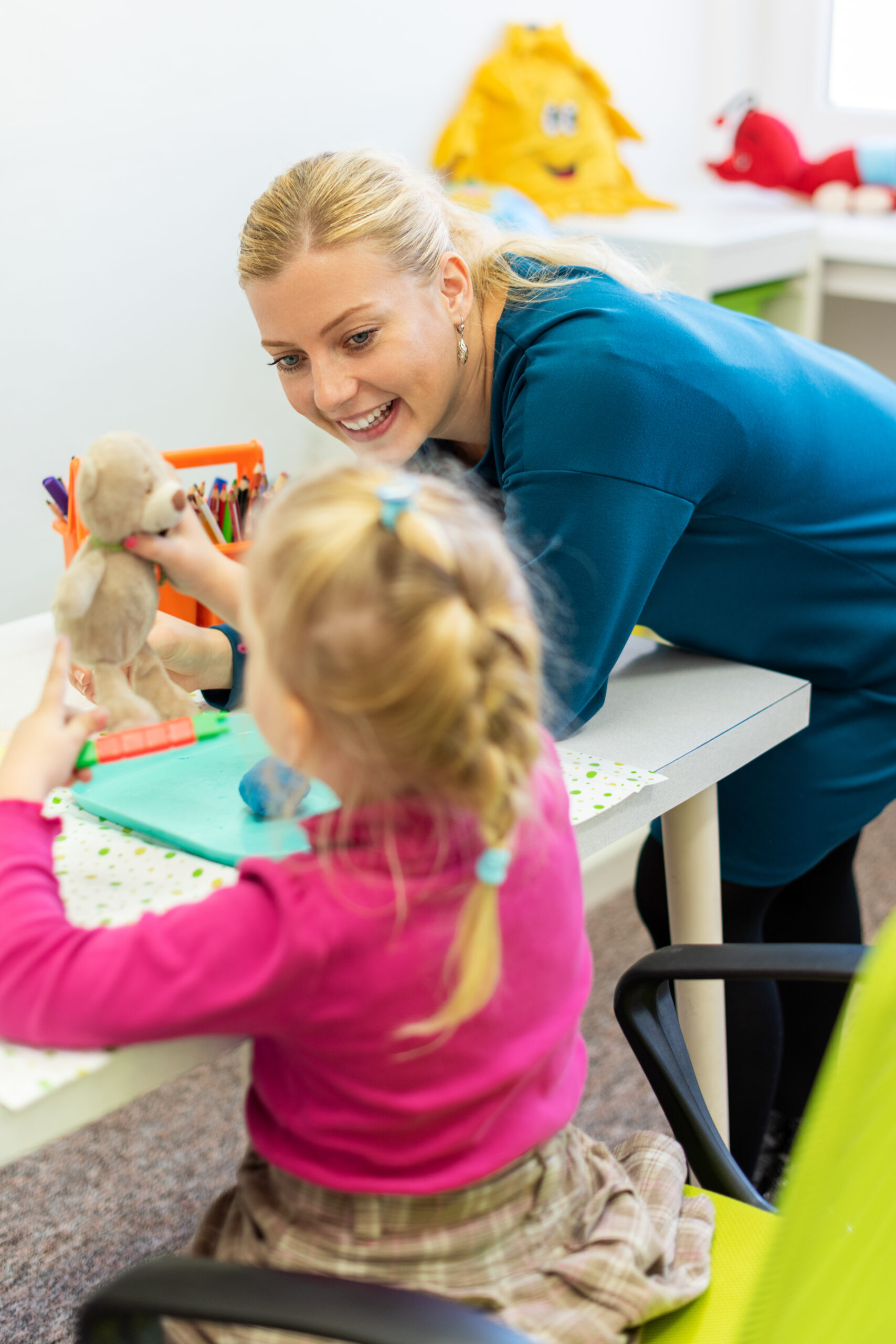
Unlocking Potential’s Speech and Language Therapy team stepped in, beginning with a detailed assessment that revealed Sadie’s expressive and receptive language skills were significantly delayed. Without early intervention, these communication challenges could have a lasting impact on her learning, friendships, and emotional wellbeing.
We put together a plan that would change the trajectory of her school life — and her future.
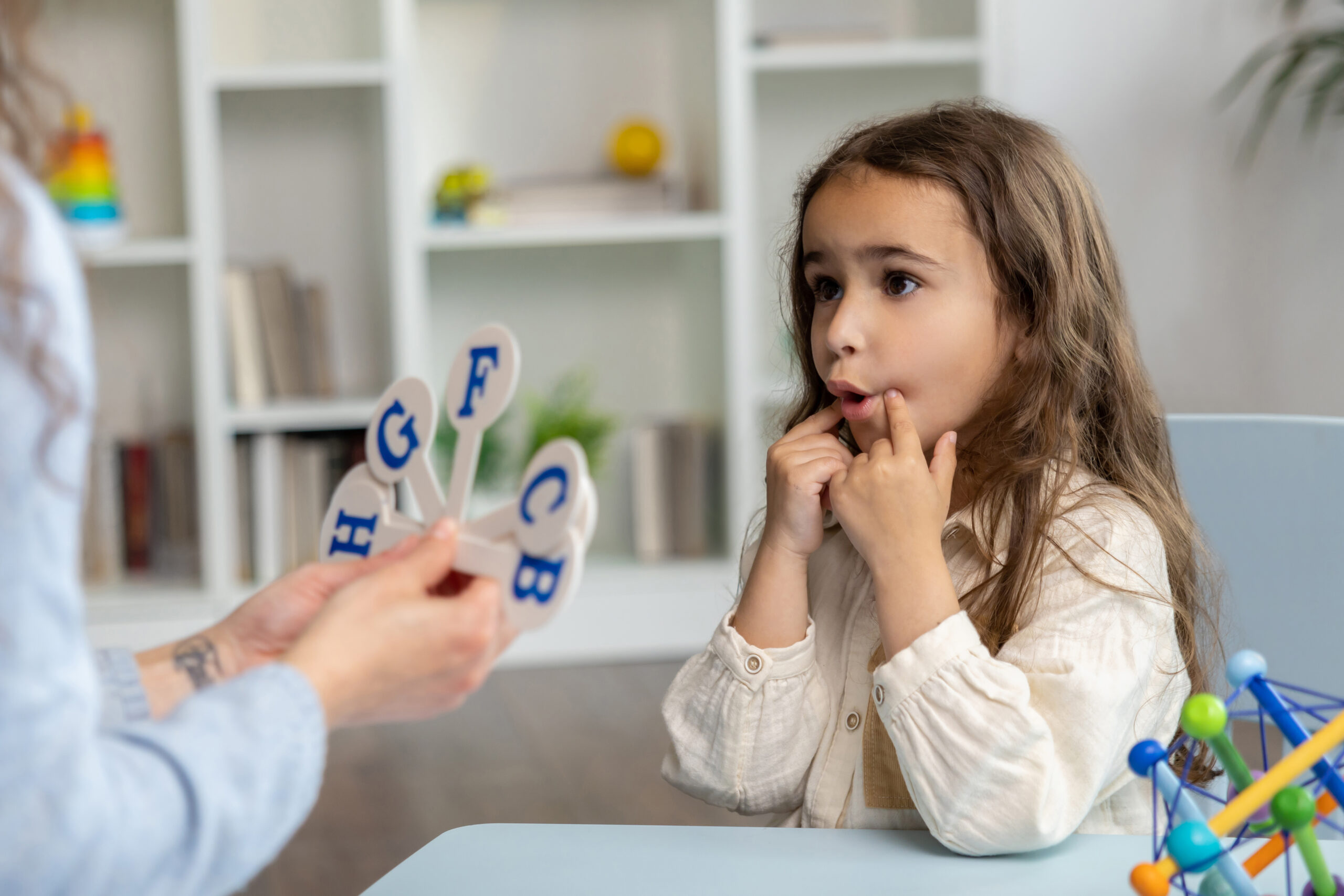
Our therapists used the Colourful Semantics approach, a visual language tool that breaks sentences into colour-coded parts, helping children understand grammar and build sentences in a structured, accessible way. By making abstract language visual and tangible, Sadie began to grasp the building blocks of expression. It gave her confidence. It gave her a way in.
But we knew therapy couldn’t stop at the therapy room door.
We took a Total Communication Approach — one that values all forms of expression equally. Our therapists worked alongside Sadie’s teachers to embed communication support throughout the day. This included modelling and implementing tools like Makaton signing, communication boards, now-and-next visual schedules, and visual prompts to reduce confusion and anxiety. Her teachers were trained in how to communicate inclusively, adapting their language and expectations to meet Sadie where she was.
We also introduced whole-class attention and listening strategies — focusing on skills like turn-taking, shared attention, and active listening — so that Sadie could learn in an environment that supported her needs and didn’t leave her behind.
Over time, change took root.
Sadie began to speak more. She started following instructions and asking for help. Her sentences, once silent or unclear, became more structured and confident. She played more freely, took part in learning activities with greater ease, and grew more connected to the people around her. The classroom, once overwhelming, became a space where she could thrive.
The most transformative part? This wasn’t just change for Sadie — it was change for the whole environment. Her teachers now feel more confident in recognising and responding to the needs of children with speech and language delays. The strategies we introduced continue to benefit the wider classroom, long after the intervention ends.
Sadie’s journey is one of quiet transformation. Of a little girl who once sat on the edges, now stepping into the centre of her own story — with the tools, the support, and the confidence to be heard.
Because when we give children a voice — in every form it might take — we give them the power to connect, to grow, and to belong.

Other news

Annie, Alice, Ava, and Aisha were all in the same [...]